
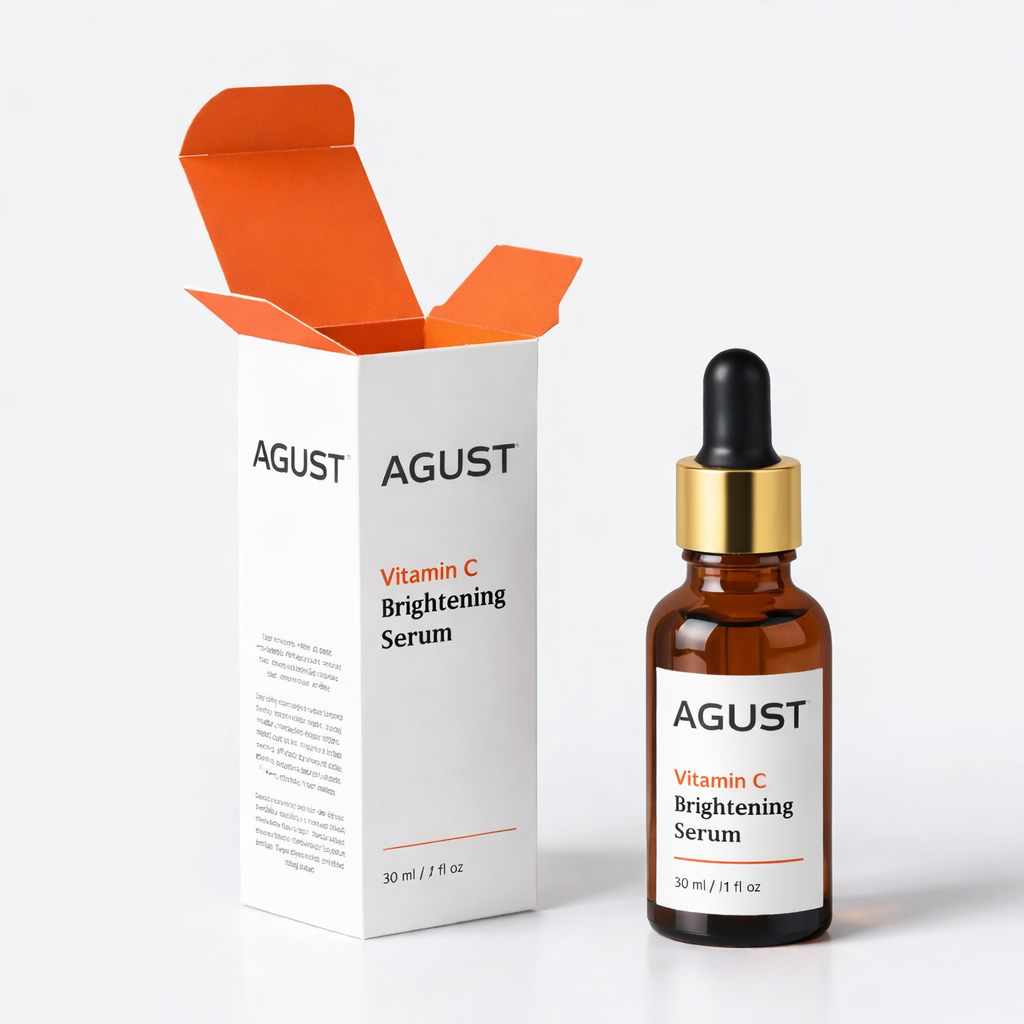

Two brands can order the same box dimensions in the same cardboard. The one that uses finishing well looks like it costs twice as much. Printing and finishing are where custom skincare boxes go from functional to brand-defining, and the choices you make here have a larger effect on perceived quality than most brand owners expect.
This guide covers every finishing option available for custom skincare boxes, with specific guidance on when each one works and when it adds cost without adding value.
Full-Color Printing: CMYK vs Pantone
Every custom skincare box starts with printed artwork. The two main printing methods are CMYK and Pantone, and choosing between them depends on your design and how precisely your brand colors need to match across production runs.
CMYK printing uses four ink colors (cyan, magenta, yellow, and black) to reproduce full-color designs. This is the standard for boxes with photographic imagery, complex illustrations, gradients, or designs that use more than three colors. CMYK is cost-effective because it does not require custom ink mixing. The trade-off is that some specific brand colors, particularly bright oranges, vivid purples, and warm reds, can be difficult to reproduce exactly with only four inks.
Pantone printing uses pre-mixed spot color inks to achieve precise color accuracy. If your brand has a specific PMS color that needs to be exact across every production run, Pantone matching ensures consistency. Many skincare brands use a hybrid approach: CMYK for the overall design, plus one or two Pantone spot colors for the logo or key brand element. This gives you full-color flexibility with precision where it matters most.
For most custom serum boxes, cream packaging, and lotion boxes, CMYK printing produces excellent results. If your brand mark includes a very specific color, adding a Pantone spot to your print spec is worth the incremental cost.
Foil Stamping: When it Works and When it Doesn’t
Foil stamping presses a thin layer of metallic or colored foil onto the box surface using a heated die. The result is a reflective, dimensional element that catches light in a way printing alone cannot replicate. Used well, foil stamping is one of the most effective signals of quality in skincare packaging.
Gold foil is the most popular choice for premium skincare. It reads as warm, established, and confident. Silver foil is cleaner and more modern. Rose gold has become common for women’s wellness and beauty brands. Holographic foil creates a rainbow effect and works well for trendy or youth-oriented products. Matte foil is available for brands that want the dimensional quality of foil stamping without the high shine.
Foil stamping works best on logos and brand marks. A foil-stamped logo on the front panel communicates more than foil applied across multiple elements. The trap is overusing it. When foil covers large areas of a box surface, it starts to look cluttered and the premium quality signal is lost. Apply foil to one element per surface, maximum.
Foil stamping requires a custom die, which adds a one-time tooling cost. Factor this into your budget when planning a first order. The tooling cost is amortized across all units, so per-unit impact decreases significantly at higher quantities.
Embossing and Debossing
Embossing raises a design element above the surface of the box. Debossing presses it below the surface. Both create a tactile, dimensional effect that customers can feel when they pick up the packaging, and that quality cue registers immediately.
Embossing works best on logos, brand marks, and structural pattern details. A raised logo on the front of a custom serum box creates an instant quality signal before the customer reads any text. Embossing combined with foil stamping, known as registered embossing, is one of the most premium finishing combinations available, and is the standard treatment for luxury skincare and prestige personal care packaging.
Debossing creates a pressed-in effect that reads as subtle and sophisticated. It suits brand names, short taglines, and decorative elements. Debossed elements on kraft packaging look particularly effective because the compressed natural fibers create a tonal variation that enhances the depth of the impression.
Blind embossing uses an unprinted, un-foiled raised element. The design is visible only through light and shadow. This is one of the most understated premium effects available and works at any price point above $25. A blind-embossed brand mark on a soft-touch matte box communicates quality without announcing itself loudly. Popular on high-end cream packaging and minimalist brand designs.
Lamination: Gloss, Matte, and Soft-Touch
Lamination applies a thin film over the printed surface of the box. Beyond aesthetics, lamination protects the printing from scuffing, moisture, and handling damage through shipping and retail display.
Gloss lamination creates a shiny, reflective surface that makes colors appear more vivid and saturated. It works well for bright, colorful designs and gives the packaging an energetic, high-contrast feel. Gloss is a practical choice for mass-market skincare and vibrant brand identities that need to pop at retail.
Matte lamination produces a flat, non-reflective surface. Colors appear slightly more subdued, which gives the box a contemporary, editorial quality that is widely used in premium skincare packaging. Matte is the default choice for most skincare brands. It reads as clean and sophisticated across every product tier from clean beauty to luxury. If you are choosing one lamination finish and are unsure which to pick, matte lamination is the right answer for skincare.
Soft-touch lamination creates a velvety texture that feels different from any other surface. It is the most premium lamination option and the one that most strongly elevates perceived quality when a customer picks up the box. Soft-touch is particularly effective on dark-colored boxes and pairs exceptionally well with foil stamping and spot UV, where the contrast between the soft matte surface and the shiny elements creates maximum visual impact. The cost difference between matte and soft-touch lamination is relatively small per unit, but the effect on the customer experience is substantial.
Spot UV Coating
Spot UV applies a high-gloss, clear varnish to specific areas of the box surface. When applied over matte or soft-touch lamination, the contrast between the flat base coat and the glossy UV elements creates a striking visual and tactile effect.
Spot UV works best on logos, brand marks, product name callouts, and decorative accents. Applied to a logo over a matte background, it makes the brand mark appear to float above the surface. Applied to a botanical pattern or geometric element, it creates visual depth and texture.
Spot UV over soft-touch lamination is one of the most popular finishing combinations in premium skincare packaging. The contrast between the velvety surface and the smooth, high-gloss UV areas creates a box that customers examine closely and remember. It is a highly effective finish for face mask packaging, gift set boxes, and any custom skincare box where the physical experience of handling the packaging matters.
Window Die-Cuts
Window die-cuts create an opening in the box covered with a clear film, allowing customers to see the product inside without opening the packaging.
Window die-cuts work well for products with attractive container designs that are worth showing. Custom serum boxes with distinctive dropper bottles, eye cream packaging with elegant small-format containers, and skincare set boxes where showing multiple products creates a gift-ready presentation are all good candidates.
For e-commerce, window boxes allow product photography that includes the container, which can improve conversion rates on product listing pages. At retail, they let customers evaluate the product container before making a purchase decision.
Window die-cuts add a tooling cost and a small per-unit cost for the film. The cut-out also removes structural material from the box, so placement needs to account for the box’s structural integrity, especially on smaller custom skincare boxes.
Choosing Finishes by Brand Tier
The finishing decisions should follow from your brand positioning and product price point.
Below $30 per product: Full-color CMYK printing with matte lamination delivers a professional, polished result without significant per-unit cost. If budget allows, add one accent finish: foil stamping on the logo or spot UV on the brand mark. That single premium element communicates more than adding multiple moderate finishes.
$30 to $80 per product: This is the range where finishing combinations start to make a real difference competitively. Soft-touch lamination paired with spot UV, or matte lamination with foil stamping, creates packaging that competes directly with established prestige brands without requiring a rigid board substrate.
Above $80 per product: Customers at this price point expect premium packaging. Soft-touch lamination, registered foil embossing, and attention to interior finishing details including interior printing, tissue inserts, and printed structural elements are all worth considering. This is also where rigid board becomes the standard material, with all the finishing options applied to the printed outer wrap.
The best way to evaluate finishing options for your custom skincare boxes is to see them applied to your actual design. When you request a quote, describe your finishing preferences and our team will recommend the right combination for your product category, brand positioning, and budget. Digital proofs are included with every order so you can review the design before production begins.


