
Your formula is ready, your brand identity is defined, and you are ready to take the product to market. The packaging decision is next. Choosing custom skincare boxes requires a few decisions made in the right order. Get the sequence wrong and you end up with packaging that looks right in a mockup but creates problems in production. Get it right and your boxes protect your product, represent your brand, and hold up through shipping and retail.
This guide covers every decision in the right order, from container specs to materials to finishes to minimum quantities.
Start with what goes inside the box
Before you make any decision about materials, finishes, or box structures, write down what goes inside. The container format determines everything downstream.
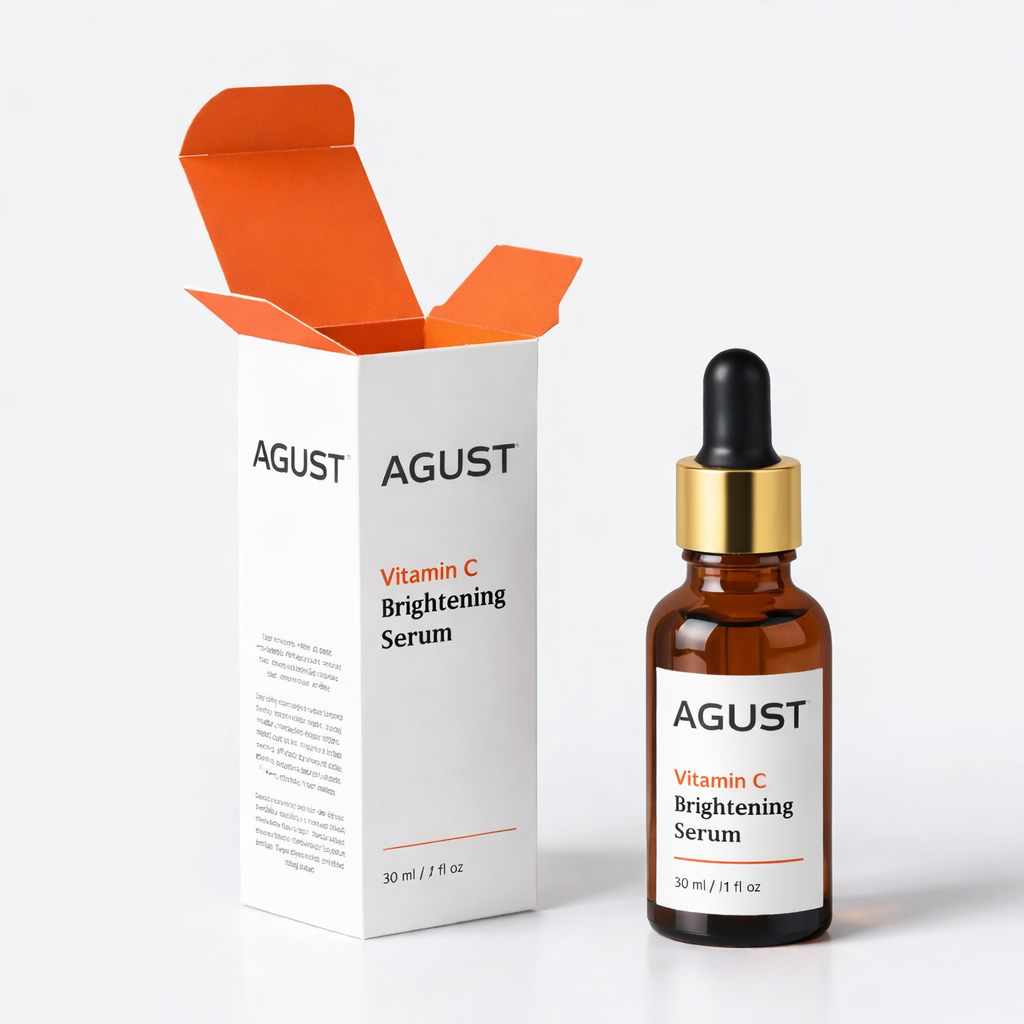
A 30ml glass dropper serum bottle requires a box with a precise internal fit and, ideally, a die-cut insert to hold the glass securely during shipping. A 250ml pump lotion bottle needs more height and structural support. A flat sheet mask sachet requires a completely different approach to box depth. A three-product gift set needs a rigid base with compartmented inserts sized to hold each piece.
This is not just about dimensions. Container formats determine whether you need an insert, what closure type is appropriate, and how the box behaves during e-commerce fulfillment versus retail shelf display. Custom serum boxes, custom eye cream boxes, and custom lotion boxes all start from different structural requirements because the containers inside them are different.
Start by documenting your container’s height, diameter or footprint, and weight. If you have multiple products in a line, do this for all of them before engaging with any manufacturer.
Choose a material that fits your brand tier
Custom skincare boxes are produced in three primary substrates. Your choice should match your product’s price point and the expectations of your target customer.
Coated cardboard is the most widely used material for custom skincare boxes. It prints full-color with excellent detail, accepts every lamination and foil finish, and costs less per unit than rigid board at comparable quantities. It is the right starting point for custom cream boxes, moisturizer packaging, cleanser packaging, toner boxes, and face mask boxes. Cardboard suits most brands from everyday clean beauty to premium, and it handles the complete finishing menu without limitation.
Rigid board is thick chipboard construction, used for boxes that open and close without a folded seam. It signals quality before any printing or finish is applied. Use it for gift sets, luxury single products, and anything positioned above $50 at retail. Custom skincare gift set boxes are almost always produced in rigid board for exactly this reason.
Kraft is uncoated natural paper with an earthy, tactile quality that communicates sustainability and transparency. It is the right material for clean beauty, botanical, and eco-positioned brands. White kraft is available for brands that want the natural aesthetic with cleaner backgrounds for full-color printing. You can explore material options across our full skincare packaging range.
The decision framework: cardboard for flexibility and cost efficiency, rigid board for luxury positioning, kraft for natural brand identity.
Pick a box style that fits how the product is sold
Once you have chosen a material, the structural format should follow from how and where the product is sold.
Tuck-top end box is the standard retail format for skincare packaging. The bottom is glued, the top folds closed. It assembles quickly, ships flat from the manufacturer, and is the correct structure for most serum boxes, moisturizer packaging, and cleanser boxes at mid-range and premium price points.
Two-piece rigid box (lid and base) is the classic luxury format. A separate lid lifts cleanly from the base. Use this when the unboxing moment matters, such as for high-end single products sold through specialty retail or as standalone gifts.
Drawer box (sleeve and tray) creates a slow, deliberate opening experience. An outer sleeve slides off to reveal an inner tray. Popular for custom eye cream boxes and premium single-product launches where the unboxing gesture communicates value.
Window box is any of the above structures with a clear die-cut opening that lets the customer see the product inside without opening the box. Useful for e-commerce product photography and for products with distinctive container designs worth showing.
Magnetic closure box is a rigid-format box with embedded magnets in the lid and base. The standard format for skincare gift sets and starter kits. It creates a premium closure experience and photographs exceptionally well for product and lifestyle shoots.
Invest in the right finish, not every finish
Finishing choices have a larger impact on perceived quality than most brand owners expect. The mistake is adding too many. One well-chosen finish applied to the right element elevates a box. Multiple competing finishes add cost without adding clarity.
Matte lamination is the default for skincare packaging. It creates a flat, sophisticated surface that reads as clean and premium, works across every brand tier, and lets printed colors appear in their best version. If you are choosing a single finish, matte lamination is almost always the right answer.
Soft-touch lamination is worth the cost if your product sits above $40 at retail. The texture is physically different from standard matte and creates a tactile quality signal customers notice immediately. Pair it with spot UV on your logo for maximum contrast at minimal cost.
Foil stamping should be applied to logos and brand marks, not spread across the whole box. Gold and silver are the most popular. Rose gold works well for women’s wellness brands. One foil element on the front panel communicates more than foil applied to multiple areas.
Spot UV applies high-gloss varnish selectively to a matte or soft-touch surface. Use it on logos, brand callouts, or decorative accents. The contrast between the flat background and the glossy UV element creates visual dimension at relatively low cost.
Embossing and debossing raise or recess design elements into the material. Blind embossing on a brand mark over a soft-touch surface is one of the most understated premium effects available, and it works at any price point above $25.
Understand MOQs before you commit
Minimum order quantities for custom skincare boxes vary by construction complexity and material. A practical starting point for most brands is 100 units per design. At that quantity, you have access to custom dieline engineering, full-color printing, and the full finishing menu.
The per-unit cost at 100 units is higher than at 500 or 1,000 units because setup costs are distributed across fewer boxes. The jump from 100 to 500 units typically produces the most significant per-unit savings. Above 2,500 units, the savings curve flattens.
For a first production run, order a quantity you can realistically sell through in three to six months. This keeps inventory manageable and gives you the flexibility to adjust your design or formulation before committing to a larger run. Reorders after the first order use your existing dieline, which speeds up production and can reduce setup costs.
Questions to ask your packaging manufacturer
When requesting a quote or evaluating a manufacturer, these questions will tell you quickly whether they understand custom skincare packaging.
What is your standard lead time from artwork approval to shipment? For most custom skincare box orders, 10 to 15 business days is the standard. Longer timelines may reflect production backlogs or slower communication.
Do you provide digital proofs before production begins? Any reputable manufacturer sends digital mockups and proofs for your review before any production starts. This step protects you from receiving finished boxes with color or structural issues.
Who owns the dieline file after production? Your dieline is the structural template for your box. You should own it or have access to it for future reorders, even if you work with a different manufacturer later.
Are physical samples available before a full run? Digital proofs show the design. Physical samples show the material, weight, and finish. They are available on request and give you a complete picture before committing to production.
What is your process if there is a defect? A manufacturer with quality control in place will describe their process clearly and specifically.
Getting your custom skincare boxes or cosmetic boxes right on the first order sets the foundation for every reorder after it. Browse the full skincare packaging range to see box types and material options by product format. When you are ready to start, request a free quote and our team will respond within 24 hours with pricing, material recommendations, and a production timeline.


